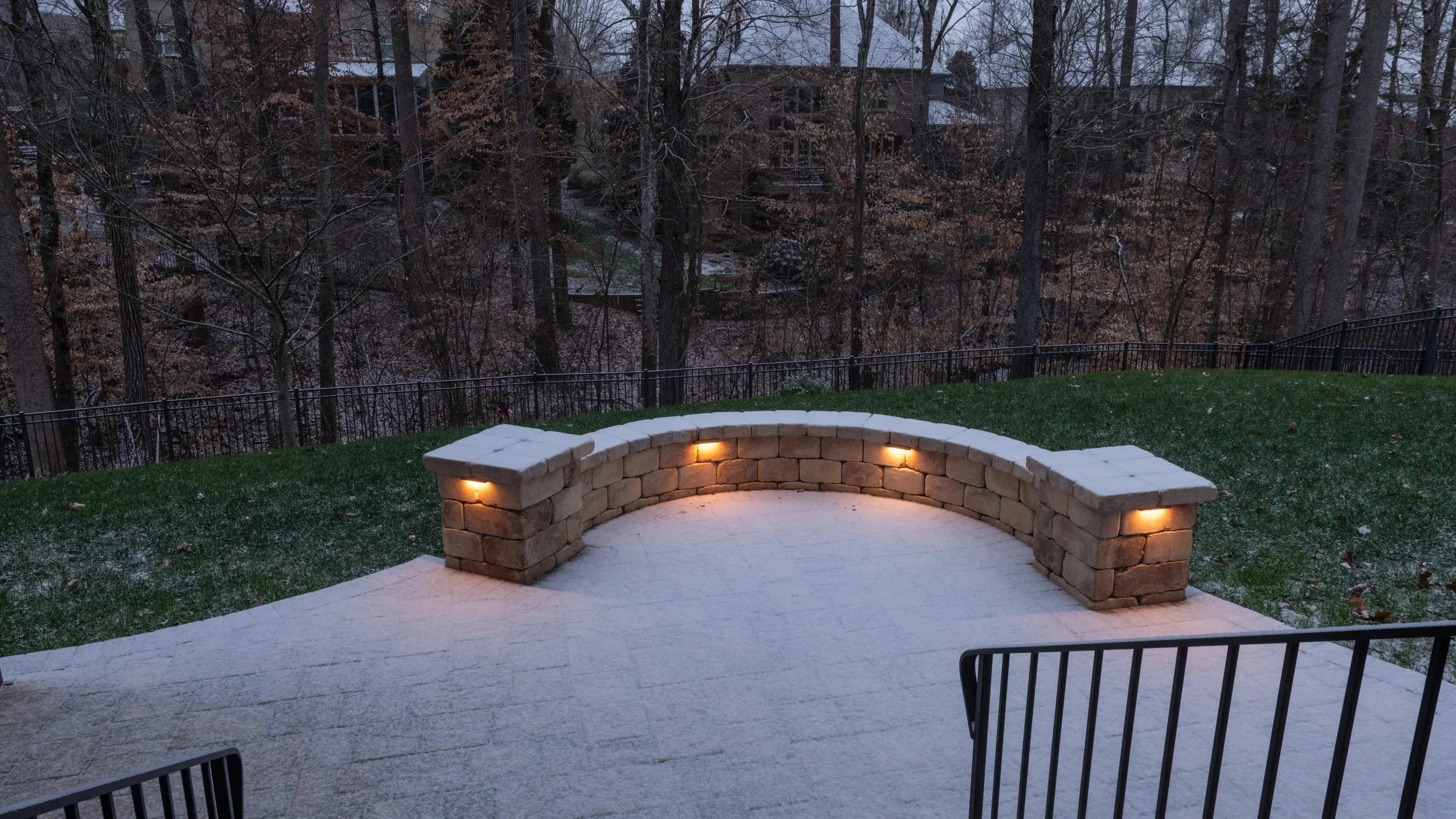
Lighting outdoor living spaces has become a defining priority in residential design. According to the 2026 U.S. Houzz Outdoor Trends Study, lighting leads all outdoor system upgrades, chosen by 77% of homeowners undertaking renovations. Moreover, landscape lighting accounts for 80% of those lighting projects.
That momentum reflects a broader shift in how homeowners use their yards. Outdoor renovations now focus less on resale and more on everyday living. As a result, lounge areas, dining zones, quiet retreats, and outdoor kitchens serve as extensions of the home. Homeowners also favor comfort and indoor-style furnishings, which raises expectations for how these spaces feel at night.
Across Winnetka, Glencoe, and Lake Forest, however, those spaces only deliver full value when they work after dark. That’s especially true now, with late November sunsets arriving before 4:30 p.m. Fortunately, winter also offers the perfect window to plan lighting alongside next season’s hardscape projects. In turn, the right plan turns a beautiful daytime patio into a destination every evening.
Lighting Outdoor Living Spaces Built for Lounging and Dining
Lounge areas now anchor most outdoor designs, appearing in 83% of 2026 redesigns. Within those spaces, 66% include outdoor lighting, and 48% feature a fireplace or fire pit. That pairing makes sense, since firelight and landscape lighting work together to create warmth and depth. Fire features also extend the outdoor season well into a North Shore fall. Moreover, layered lighting lets a lounge shift from lively gatherings to quiet conversation with a simple adjustment.
Dining areas follow a similar pattern. They appear in 55% of renovated outdoor spaces, and 66% of those include lighting. Nearly half also feature a fireplace or fire pit. As a result, the dining table increasingly becomes a destination that extends well beyond sunset. Lighting around the table should support conversation and dining without glare in anyone’s eyes. Soft downlighting from a pergola or nearby wall often achieves that balance.
For both spaces, effective lighting starts with the hardscape itself. Seat walls, step risers, and pillar caps provide natural locations for integrated fixtures. Similarly, low-voltage lights set into paver patios define edges and guide guests without adding clutter. When planned during design, wiring runs beneath the pavers rather than across finished surfaces. Consequently, the final result looks seamless, polished, and built to last.
Lighting Retreats, Gardens, and Outdoor Kitchens
Quiet retreats have emerged as another priority, present in 53% of renovated outdoor spaces. Most include comfortable seating, while 66% add lighting and 45% incorporate fire features. In these reading nooks and garden hideaways, softer lighting matters most. Low, warm fixtures preserve the calm atmosphere that draws homeowners there in the first place. Path lights leading to a retreat also help it feel like a destination rather than an afterthought.
Gardening zones tell a similar story. Nearly half of homeowners include dedicated gardening areas, and 64% of those incorporate lighting. Thoughtful fixtures highlight planting beds and borders, turning daytime gardens into evening focal points. Gentle uplighting on ornamental trees adds depth, while low path fixtures keep visitors on course. Moreover, lighting lets homeowners enjoy their plantings during evening gatherings, not just weekend mornings.
Outdoor kitchens, meanwhile, demand more functional illumination. Houzz found that 95% of homeowners adding an outdoor kitchen built one from scratch. Furthermore, 68% installed plumbing, electrical, or heating systems, up 10 percentage points from 2024. That infrastructure growth creates an ideal opportunity to plan task lighting over grills and prep counters. Clear, focused light at the grill makes evening cooking both safer and easier. Pairing that task lighting with softer ambient fixtures nearby keeps outdoor living rooms both practical and inviting.
Why Lighting Outdoor Living Spaces Calls for Professional Planning
As outdoor projects grow more ambitious, more homeowners turn to professionals. Projects increasingly combine structures, systems, and finishes, so coordination becomes essential. Houzz reports that 71% hired a pro in 2026, up from 65% in 2024. Landscape contractors remain the most commonly hired at 26%. Meanwhile, 20% of homeowners work with stone, paver, and concrete specialists.
That trend carries particular weight for lighting. Shade structures, for instance, rose 15 percentage points to 35% of projects, and each one opens new lighting possibilities. Pergolas can support downlights, while columns and beams can frame a space with gentle accent lighting. Built-in lighting along beams also helps a covered space feel like a true outdoor room. However, those options work best when lighting enters the conversation early rather than after construction wraps up.
Coordinated planning also prevents common setbacks. A design-build approach maps transformer locations, conduit paths, and fixture placement before excavation begins. As a result, wiring stays protected beneath the hardscape, and every zone shares a consistent look. That planning also allows separate lighting zones, so each area can be lit independently. Across Kenilworth and Highland Park, homeowners invest in cohesive outdoor environments. There, that consistency separates a good project from an exceptional one.
Lighting Outdoor Living Spaces for Year-Round Enjoyment
Lighting outdoor living spaces has shifted from a finishing touch to a core part of every design. The 2026 Houzz data makes that clear, with lighting leading all outdoor system upgrades. Moreover, lighting now appears in roughly two-thirds of lounge, dining, and retreat spaces. Each zone, from the fire pit lounge to the outdoor kitchen, needs its own balance of ambiance and function. In turn, a cohesive plan ensures every zone feels connected once the lights come on.
Winter is the ideal season to bring those ideas together. While the ground rests, homeowners can refine designs and coordinate lighting with hardscape plans. They can also secure a spot on the spring schedule before calendars fill. Retaining walls, fire features, and shade structures all benefit from the same early coordination. As a result, a new patio, pergola, or outdoor kitchen can glow beautifully from its very first evening. For an outdoor space that shines after sunset, contact the Chicago North Shore specialists at Pappas Landscape & Design.