Retaining Wall Staining: Turning Ordinary Walls Into Custom Stonework
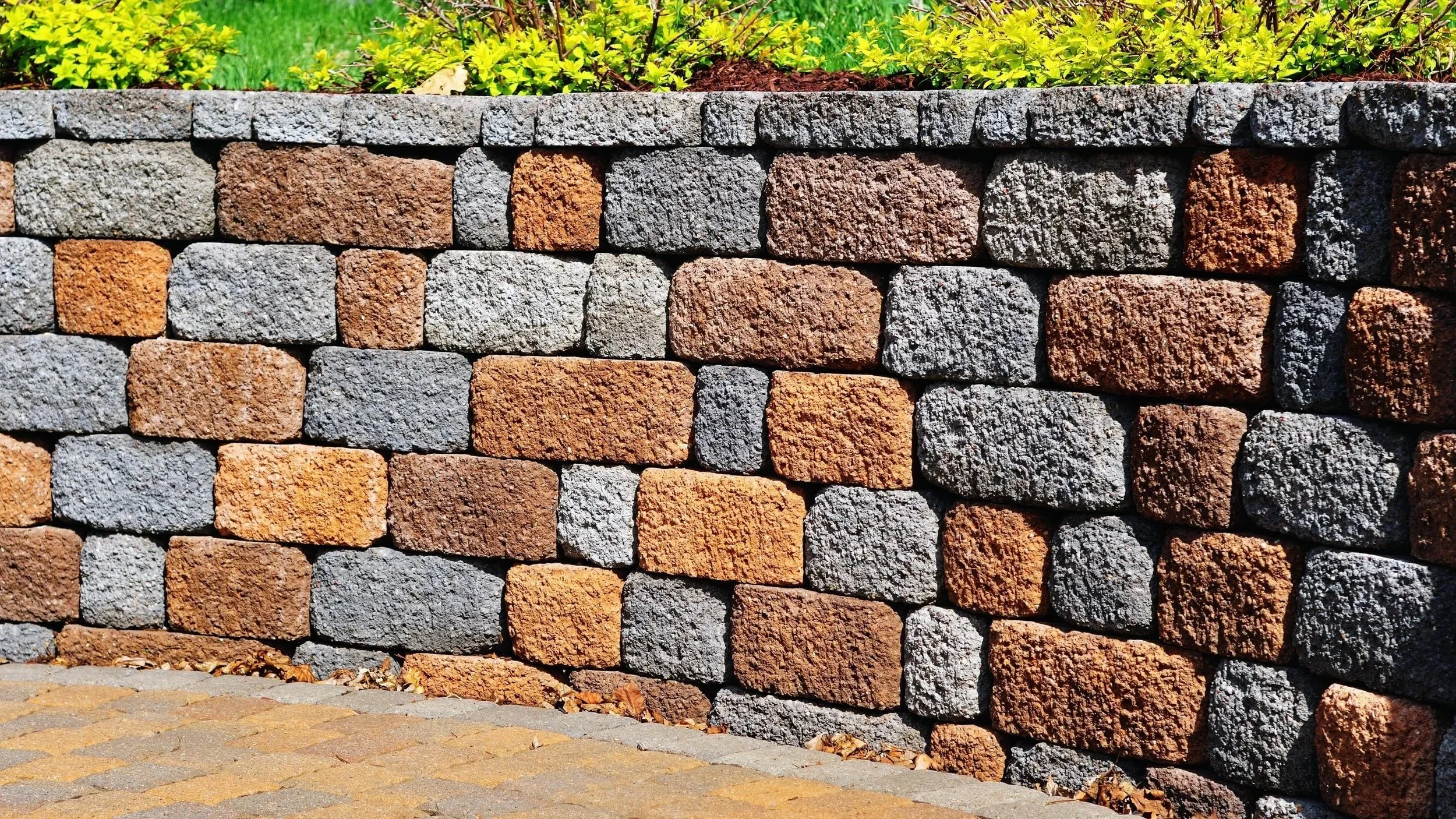
Retaining wall staining is turning heads across the hardscape industry via a fresh way to get the depth of natural stone, without the natural stone price tag. Homeowners across Chicago's North Shore often picture a wall with rich, layered stone color. However, that look quickly pushes projects past their budget. Moreover, a large wall makes the cost climb even higher.
On the other hand, decorative concrete staining closes that gap. The right wall stain transforms ordinary hardscape blocks into custom, one-of-a-kind surfaces. And the finish mimics natural variation instead of a flat, uniform color.
While the technique isn't new to the concrete industry, few hardscape contractors have applied it to retaining walls, making it a rare option for homeowners. It helps a property stand out from every other block wall on the street. A stained wall can echo the color variation found in real stone by blending naturally with existing brick, limestone, or landscaping features already on a lot.
Homeowners planning a wall this season should understand two things first:
How does the process work?
How does the cost compare to natural stone?
Each answer makes the decision easier. Each one also helps determine if staining fits a given property.
How the Retaining Wall Staining Process Works
Retaining wall staining relies on layers rather than a single flat coat of color. Crews start by applying a base coat evenly across the entire wall, giving every block the same foundation tone.
Concrete artisans then stain individual blocks in different colors at random, often avoiding any repeating pattern. This step creates the natural-looking variation that makes a wall read as real stone. A final blending coat ties the whole surface together by applying a light overspray in a single shade across the wall. As a result, this approach softens any harsh contrast between the individually stained blocks. If needed, a second light coat can even things out further.
Crews often build a small mock-up panel first, letting everyone see the target look before staining the full wall. The final product is a wall with the subtle color shifts of quarried stone. Staining technique alone achieves this look without sourcing or installing actual stone.
Trained crews can learn the process on a single project, even without prior staining background. That said, clear color guidance and a reference mock-up keep the learning curve short. Some crews start by hand-brushing the stain, then switch to sprayers once they get comfortable with the technique.
Why Retaining Wall Staining Is a Smart Investment for North Shore Homeowners
Durability and cost are the two big questions homeowners ask before committing to retaining wall staining. Fortunately, testing shows that stain bonds directly into the concrete rather than simply sitting on the surface.
In fact, during one documented test, a high-powered pressure washer struck a block at close range, yet the washer stripped away the block's surface paste before it ever removed any color. That kind of bond means the finish won't fade or peel with normal weather exposure, nor will it lift from routine cleaning. Instead, the stain becomes part of the block itself, which matters for a wall that must survive decades of Illinois freeze-thaw cycles.
Cost tells a similar story. Stained concrete walls run about 30% less than natural stone alternatives, even after accounting for the extra labor staining requires. For a large wall, that difference adds up fast, meaning homeowners no longer have to choose between budget and a high-end look. A stained wall can match existing stone, brick, or landscaping accents on a property, all while skipping the sourcing challenges, weight, and installation cost that come with real stone. Ultimately, durability and savings together make retaining wall staining a practical upgrade this year, especially for properties where natural stone was never in the original budget.
The Takeaway on Decorative Concrete Staining
Overall, retaining wall staining gives homeowners the character of natural stone at a fraction of the price. The process layers a base coat, randomly stained blocks, and a final blending coat, and together these steps create natural-looking color variation across the wall. A trained crew can learn the technique quickly, especially when a simple mock-up panel helps set expectations before work begins. Moreover, the finish holds up under pressure washing and years of Illinois weather since the stain bonds into the block instead of sitting on top of it. And because it also costs roughly 30% less than natural stone, a custom look becomes achievable on a realistic budget rather than a stretch reserved for the highest-end projects.
This kind of finish pairs naturally with broader landscape design and hardscape construction goals for property along the Chicago North Shore, whether the project is a brand-new wall or an upgrade to one that already feels outdated. Either way, staining opens design options a standard block color can't match, all without stretching a project budget past its limit or waiting on the long lead times that sourcing natural stone can involve.
To bring the stained retaining wall look to your home, contact the Chicago North Shore specialists at Pappas Landscape & Design.