2026 Hardscape Design Trends to Future-Proof Your North Shore Property
In 2026, hardscape design trends across the Chicago North Shore continue to move away from surface-level aesthetics and toward performance, longevity, and usability. Homeowners no longer evaluate patios, walkways, and outdoor structures solely on appearance. They want to know how long a system will last, how it will perform during heavy rain, and whether it will withstand repeated freeze-thaw cycles.
Climate conditions, rising material costs, and increased awareness of drainage and maintenance have reshaped expectations. North Shore homeowners now ask deeper questions about structural integrity, long-term upkeep, and how a hardscape integrates with the surrounding landscape. As a result, hardscape design in 2026 focuses on systems that manage water effectively, resist seasonal damage, and support year-round use.
These trends reflect a broader shift toward thoughtful planning and investment protection. Hardscapes function as permanent infrastructure that must perform under real Midwest conditions.
Structural Performance Drives Hardscape Planning
One of the most significant 2026 hardscape design trends is the emphasis on what lies beneath the surface. Homeowners now understand that the base system determines whether a hardscape will last for decades or require ongoing maintenance.
Designers prioritize structural performance by focusing on:
Load-bearing capacity for vehicles, foot traffic, and outdoor furnishings
Resistance to cracking caused by freeze thaw cycles
Proper base preparation to prevent settling and movement
Long-term wear performance under seasonal stress
Instead of selecting materials based on appearance alone, designers match paver systems and layouts to each space's intended use. Driveways, patios, walkways, and pool surrounds receive different structural treatments to meet specific demands.
Designers also use layout transitions to define outdoor zones. Changes in material, pattern, or orientation help distinguish dining areas, circulation paths, and seating zones without relying on excessive ornamentation. This approach improves both function and visual clarity.
Paver Systems Replace Traditional Concrete
Plain concrete continues to lose favor across Chicago North Shore projects. While it offers a lower upfront cost, it performs poorly over time in Midwest conditions.
Common issues with poured concrete include:
Cracking from temperature fluctuations
Costly repairs that leave visible patches
Limited lifespan compared to modular systems
Reduced flexibility when changes are needed
In contrast, paver systems allow individual units to be removed and replaced without disturbing the surrounding surface. When installed correctly, pavers adapt better to ground movement and seasonal stress. Homeowners also value the improved safety and accessibility pavers provide. Textured surfaces reduce slipping when wet, and level transitions improve walkability. Designers increasingly incorporate wider walkways and integrated lighting to enhance usability and safety throughout the property.
Outdoor Living and Sustainable Hardscaping Gain Momentum
Hardscape design trends in 2026 reflect a growing desire to extend indoor comfort into outdoor spaces. Homeowners want patios and gathering areas that feel intentional and usable beyond peak summer months.
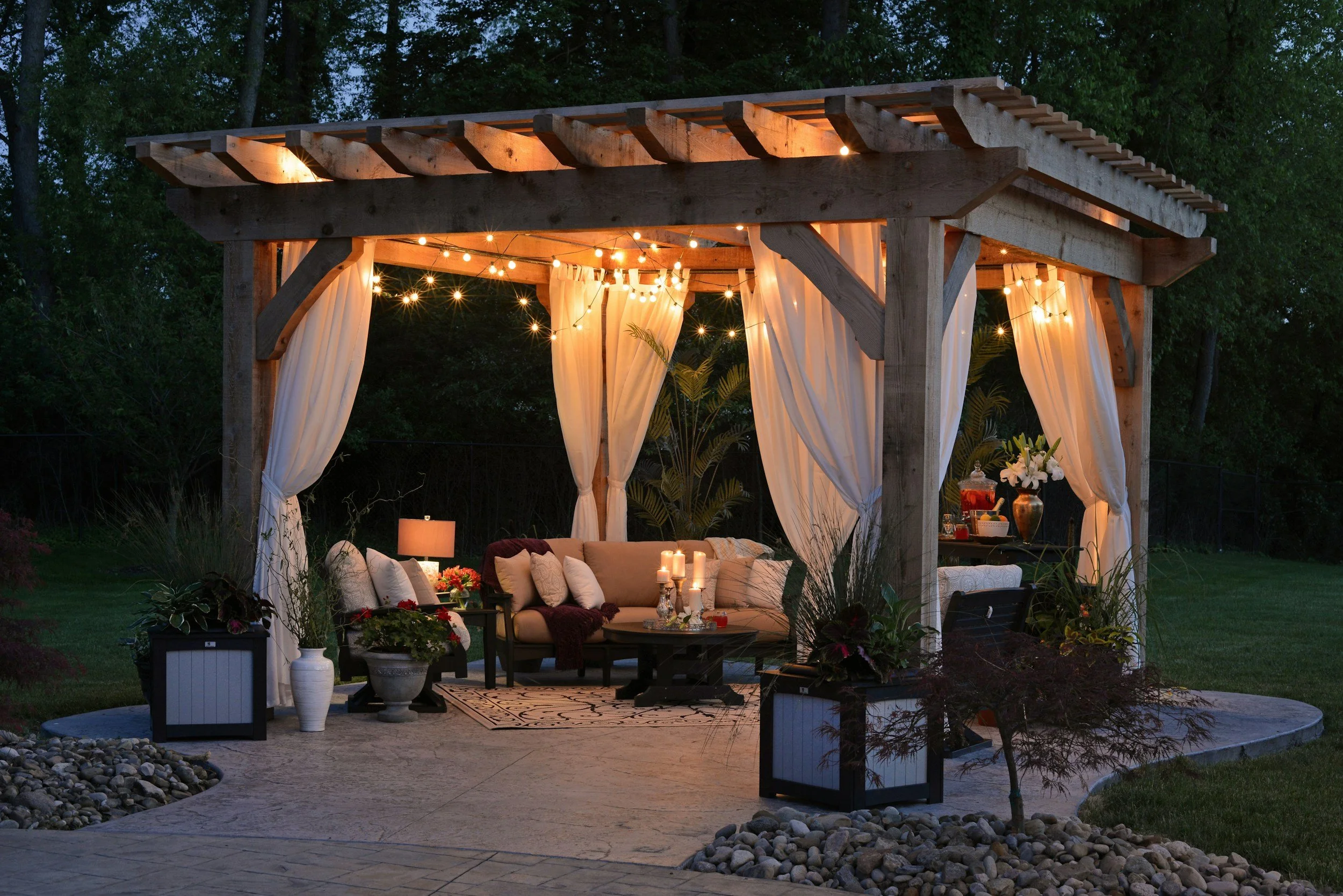
Covered structures such as pergolas, pavilions, and gazebos play a central role in this shift. Designers pair these elements with low-voltage lighting to create functional spaces for evening use and shoulder seasons. Rounded edges and curved layouts replace rigid geometry, creating a softer, more inviting atmosphere.
Material choices support this movement toward sustainability and longevity. Permeable pavers help manage rainwater runoff and reduce surface pooling, which is especially important in areas with heavy rainfall. Reclaimed stone, recyclable materials, and durable natural stone surfaces reduce environmental impact while improving lifespan. Homeowners also prioritize materials that resist staining and weathering, allowing hardscapes to maintain their appearance with minimal cleaning and maintenance.
Applying 2026 Hardscape Design Trends to Your Property
The 2026 hardscape design trends shaping Chicago North Shore properties reflect practical responses to climate, maintenance realities, and long-term ownership costs. Successful hardscapes manage water effectively, use durable materials, and integrate seamlessly with surrounding landscapes.
When designers account for soil conditions, structural demands, and seasonal stress, hardscape installations perform reliably rather than become recurring repair projects. Homeowners who plan with these trends in mind protect both their investment and their outdoor experience.
For guidance on designing and installing hardscapes built for long-term performance in North Shore conditions, contact the specialists at Pappas Company Landscape & Design.