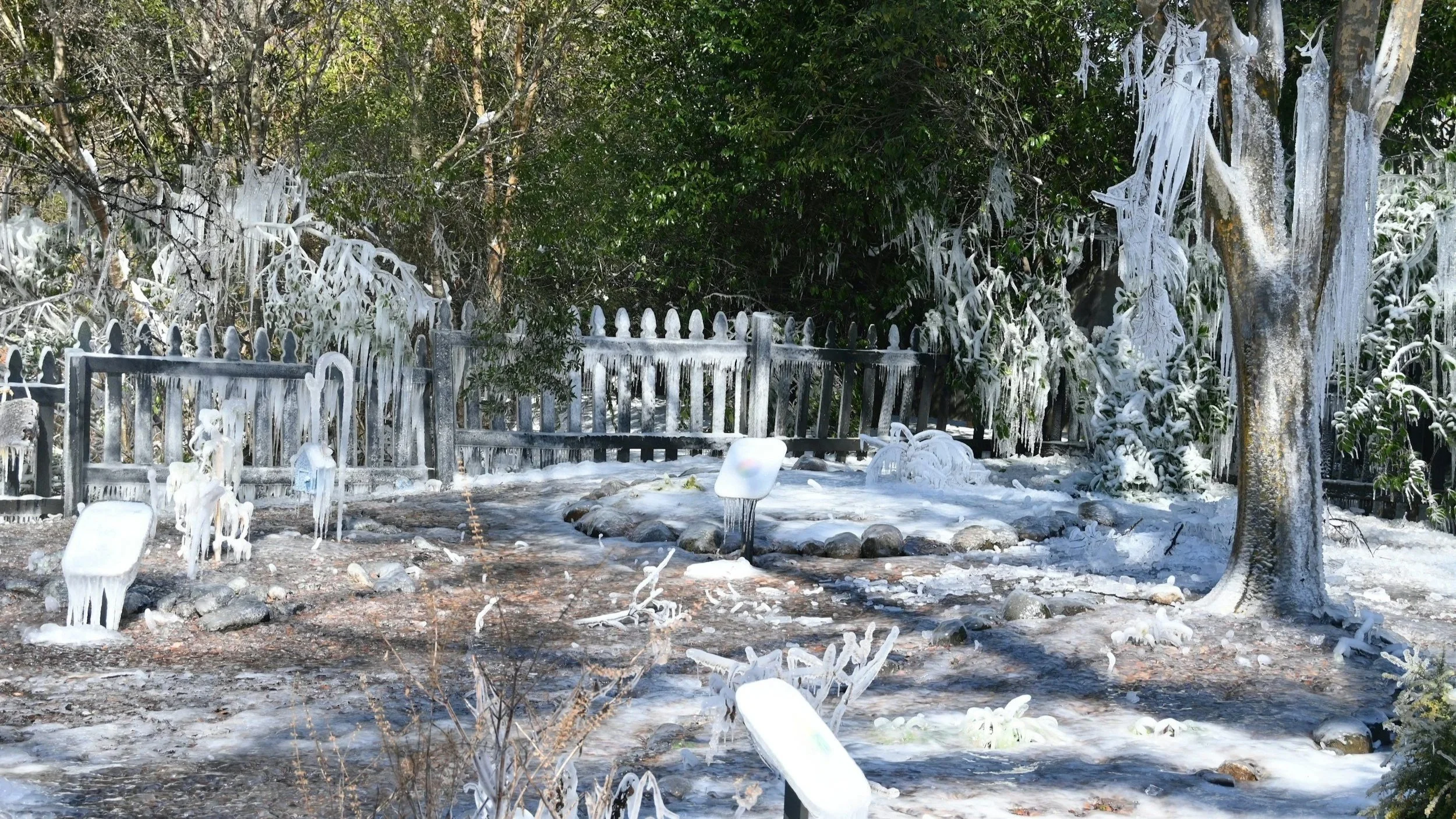
For many homeowners, freeze-thaw damage is a challenge that arises every winter, and if it's not addressed quickly, it can be extremely costly. That’s because it affects both landscaping and hardscaping surfaces, such as your patio, driveway, and retaining wall, and you can easily miss the early signs. However, once you understand how the process happens, you can protect your property and prevent damage that would’ve cost you thousands of dollars.
How Freeze-Thaw Damage Affects Your Property
Freeze-thaw occurs when water enters the small cracks in your patio or driveway. When water freezes, it expands, widening the crack. Then, when the water melts, it contracts and shrinks back.
This process might seem harmless, but many homeowners don’t realize it doesn’t just happen once or twice. Studies show that the freeze-thaw process can occur up to 7 times after a brutal Chicagoland winter. Each time the water expands and contracts, it widens the cracks in the concrete and weakens the hardscape. Ultimately, freeze-thaw damage doesn’t just affect one area, but it also affects hardscape spaces, such as patios, driveways, and retaining walls.
Patio Freeze-Thaw Damage
The first place that is affected by freeze-thaw damage is your patio. This mostly happens when water gets between the pavers and the base of the patio. Here are some signs that your patio is affected:
Uneven Spots: When frozen soil accumulates at the base of the patio, it can cause the area to shift. This leads to uneven areas in your patio that you can feel when you walk on.
Washed-Out Joint Sand: This occurs when the sand between pavers is washed away by water. Since this polymeric sand holds the pavers together, when it gets washed away, the patio surface can shift or become uneven.
Driveway Freeze-Thaw Damage
During winter, both the cold weather and the weight of your car can weaken your driveway. When this happens, water can easily seep into the tiny cracks and freeze as temperatures drop. The ice pushes the driveway surface upward. If this keeps happening every winter, it can really damage your driveway.
Some signs that your driveway has been affected are:
Cracked concrete
Sinking or low spots on the driveway
Visible gaps under the pavers
Concrete pieces chipping away
Over time, this causes significant damage and forces homeowners to seek brick paver driveway repair services or even a complete paver driveway restoration.
Retaining Wall Freeze-Thaw Damage
If your compound doesn’t have a good drainage system, the soil behind the retaining wall can end up soaking up water. When this water freezes, it expands and pushes the soil against the wall. After some time, the pressure builds up, weakening the wall.
If this issue is not addressed, you might have to repair the entire wall, which can be very expensive.
Why Spring Is the Most Important Time for Inspection
Many homeowners assume that once winter is over, the worst is behind them. Unfortunately, that's rarely the case. Winter damage typically doesn't reveal itself until spring, when temperatures stabilize, and the ground fully thaws. The repeated freeze-thaw cycles that occurred all winter long have been quietly working beneath the surface, and spring is when the full extent of that damage finally becomes visible.
That's why scheduling a spring hardscape inspection is one of the smartest things you can do as a homeowner. Catching problems before another season of rain, heat, and foot traffic makes them worse can save Chicagoland homeowners thousands of dollars in repairs down the line.
Here's what to look for:
Uneven surfaces on the patio: Shifting soil and displaced pavers can create tripping hazards and water pooling areas that worsen over time.
Pavement cracks that expanded during winter: What was a hairline crack in October may now be a wide, structural gap after months of freeze-thaw cycles.
Areas where water accumulated: Standing water is a red flag. It signals poor drainage that will continue to feed future freeze-thaw damage if left unresolved.
Washed-out joint sand: Without the polymeric sand that holds pavers in place, your patio or driveway surface becomes unstable and vulnerable to further shifting.
Bulging or leaning retaining walls: Even slight outward movement in a retaining wall is a serious warning sign that hydrostatic pressure has built up behind it over the winter.
Identifying these five issues early gives you the opportunity to make targeted, affordable repairs before they escalate into full-scale replacements. A qualified North Shore patio contractor will assess the underlying causes and address them properly. That includes:
Leveling and resetting displaced pavers to restore a safe, even surface
Replenishing joint sand to stabilize the paver system and prevent future shifting
Evaluating and improving your drainage system to ensure water is directed away from your hardscape, reducing the risk of damage in the winters ahead
Think of a spring inspection less as a repair visit and more as preventive maintenance. It’s a small investment now that protects the much larger investment you've already made in your outdoor living space.
Protect Your Patio, Driveway and Retaining Wall This Spring
The truth is that freeze-thaw damage doesn’t go away on its own and by ignoring it, it can become an even bigger problem. What starts as a small crack can become a bigger problem in a couple of months. If you’re ready to protect your patio, driveway, and retaining wall and contact the North Shore patio contractors at Pappas Company Landscape & Design to schedule a landscape and hardscape evaluation.